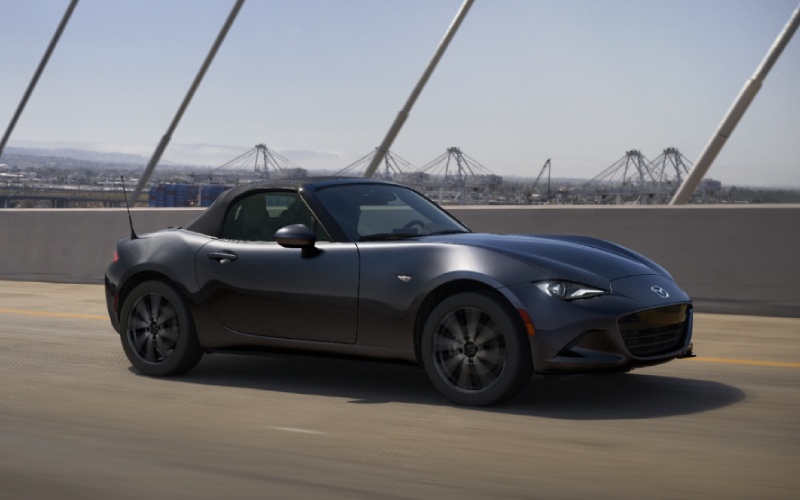
Cardinale Mazda - How Kinematic Posture Control Shapes 2026 Mazda MX-5 Miata Confidence for Seaside, CA Drivers
The 2026 Mazda MX-5 Miata is famous for being light, balanced, and wonderfully direct, but one of its most meaningful modern engineering features is something many shoppers do not fully understand at first: Kinematic Posture Control. It is not a flashy feature designed to dominate the driving experience. Instead, it quietly supports what the MX-5 Miata has always done best, helping the car feel settled, responsive, and connected through corners. For drivers around Seaside, CA, where daily routes can move from city streets to open roads and coastal curves in a matter of minutes, that kind of composure makes the roadster feel confident without becoming complicated.
At its core, Kinematic Posture Control is designed to help suppress body roll when cornering by working with the vehicle’s suspension and brakes. The result is a more planted feeling as the car moves through a bend. That matters because the MX-5 Miata is not built around excessive power or unnecessary weight. It is built around balance. With its rear-wheel-drive layout, near 50/50 weight distribution, Skyactiv®-G 2.0-liter four-cylinder engine, and low seating position, the roadster gives the driver clear feedback. Kinematic Posture Control complements that formula by supporting stability in a way that feels natural rather than intrusive.
What Kinematic Posture Control Actually Does
When a vehicle corners, weight transfers across the chassis. In many cars, that movement can create a noticeable leaning sensation. The MX-5 Miata is already engineered to feel agile, but Kinematic Posture Control adds another layer of precision by subtly applying brake force to help the vehicle maintain a more composed posture through a turn. The system is tuned to support the roadster’s lightweight character, which means it helps without making the car feel artificial or overly managed. Drivers still feel the road, still control the line, and still enjoy the classic MX-5 Miata sense of involvement.
This is important for shoppers who want a sports car that feels rewarding at real-world speeds. Not every enjoyable drive happens on a track, and not every curve requires aggressive inputs. The beauty of the 2026 model is that its engineering supports everyday confidence. Whether you are making a precise turn onto a neighborhood road, following a winding route outside town, or simply enjoying an open-air drive, the car responds with clarity. Kinematic Posture Control helps the MX-5 Miata feel ready for the next corner while keeping the driver at the center of the experience.
Why It Fits the MX-5 Miata Philosophy
Mazda’s approach to the MX-5 Miata has always centered on Jinba Ittai, the feeling of horse and rider as one. That idea may sound poetic, but it translates into very real engineering decisions. The driver’s seat is positioned to support a natural posture, the steering is tuned for response, the chassis is kept light, and the powertrain is designed to deliver usable acceleration. Kinematic Posture Control fits that philosophy because it does not replace driver skill. It enhances the communication between the vehicle and driver by helping the chassis stay more composed when cornering loads increase.
- Natural handling feel: The system supports stability while preserving the MX-5 Miata’s direct roadster personality.
- Cornering confidence: Subtle brake and suspension interaction helps reduce body roll sensations during turns.
- Driver-centered control: The system is tuned to assist rather than overwhelm the driving experience.
- Everyday usefulness: Benefits can be felt on routine roads, not only during enthusiastic driving.
For shoppers comparing sports cars, this distinction matters. Some vehicles chase numbers first and driving feel second. The MX-5 Miata takes a different route. Its 181-horsepower engine and 151 lb-ft of torque are paired with a lightweight platform that lets the driver enjoy momentum, precision, and balance. Kinematic Posture Control makes that balance even more satisfying by helping the car stay poised when cornering. It is the kind of feature that may not be the first thing someone asks about, but once explained and felt on a test drive, it becomes a reason the roadster feels so intuitive.
How It Works with Other Performance Features
Kinematic Posture Control is only one part of the MX-5 Miata’s broader performance character. Manual transmission models can offer an available Asymmetric Limited Slip Differential, which supports stability and steering precision while retaining the lightweight sports car feel. Club models add sport-focused hardware such as a sport-tuned suspension with Bilstein® dampers, 17-inch Metallic Black alloy wheels, and available BBS/Brembo/Recaro Package content for shoppers who want a more performance-oriented setup. The result is a lineup that lets drivers choose how focused the roadster should feel, from pure and simple to more aggressively equipped.
Technology and safety features also help round out the experience. The MX-5 Miata includes standard Blind Spot Monitoring, Rear Cross Traffic Alert, Lane Departure Warning System, and Smart Brake Support - Forward. Available systems such as Adaptive Front Lighting System, Traffic Sign Recognition System, High Beam Control, and Mazda Radar Cruise Control on automatic transmission models add more confidence for shoppers who want modern support. Inside, Alexa Built-in, Apple CarPlay® and Android Auto™ integration, the MyMazda App, available Bose® Premium Audio, and available SiriusXM® help the roadster feel current without distracting from the driving mission.
Why Seaside, CA Drivers Should Pay Attention
Drivers near Seaside often need a car that can feel comfortable in town yet be entertaining when the road opens up. The MX-5 Miata is compact enough to make everyday parking and maneuvering simple, while its responsive chassis makes familiar drives more engaging. Kinematic Posture Control adds a composed feel through curves, which is especially meaningful in a region where road character can change quickly. If you are shopping from a practical mindset, you may appreciate that the feature supports confidence. If you are shopping as an enthusiast, you may appreciate that it does so without dulling the car’s personality.
Cardinale Mazda can help shoppers compare trims, transmissions, and body styles while serving Pacific Grove, Seaside, and Marina with a straightforward research and shopping experience. A test drive is especially useful with a vehicle like this because the difference is felt through the steering wheel, seat, and chassis response. Specifications tell part of the story, but the MX-5 Miata’s appeal becomes clearer when you feel how quickly it reacts, how naturally it rotates through a curve, and how Kinematic Posture Control supports the car’s poise without taking away the fun.
Frequently Asked Questions:
Is Kinematic Posture Control standard on the 2026 Mazda MX-5 Miata?
Yes, the system is part of the MX-5 Miata’s performance engineering and is designed to help the vehicle feel more composed when cornering.
Does Kinematic Posture Control make the car less fun to drive?
No. It is tuned to support the MX-5 Miata’s lightweight sports car character. The goal is to enhance stability while keeping the driver connected to the road.
Is this feature only useful for aggressive driving?
Not at all. While enthusiasts may notice the added composure through faster corners, everyday drivers can also appreciate the planted, predictable feel during normal turns.
Should I choose a manual or automatic MX-5 Miata?
That depends on how you like to drive. The manual offers a classic sports car connection, while the automatic can add convenience and access to select available driver-assist technology.
The 2026 Mazda MX-5 Miata remains special because it respects the driver. Kinematic Posture Control is a perfect example of that philosophy. It adds polish, confidence, and precision, yet it does not hide the roadster’s playful nature. For shoppers who want a car that feels alive without feeling demanding, this feature helps explain why the MX-5 Miata continues to stand apart.